
How to Prevent Electrical Fires in Your Home

Most home electrical fires are preventable. They start from a handful of common, fixable hazards: aging wiring, overloaded circuits, damaged cords, and appliances that have outlived their safe service life. Home electrical fires cause an estimated 527 civilian deaths and $2.4 billion in property damage in U.S. homes every year, according to the National Fire Protection Association.
This guide walks through the hazards behind most home electrical fires, the warning signs of a developing problem, and when it's time to call a professional. It's written for homeowners across St. Louis and Southern Illinois, where much of the housing stock predates today's electrical demands.
Here's what this guide covers:
- Most electrical fires start from a handful of preventable hazards, from aging wiring to overloaded circuits.
- Lithium-ion battery charging is a fast-growing fire risk most home safety guides overlook.
- Warning signs like flickering lights and warm outlets often show up before a fire does.
- Water should never touch an electrical fire, and getting everyone out safely comes first.
- Some hazards are simple fixes, but others need a licensed electrician the same day.
What Causes Electrical Fires?
Electrical fires start when heat builds up faster than it can dissipate. That heat usually comes from arcing, where current jumps across a damaged or loose connection, or from resistance heating, where a wire or connection is forced to carry more current than it can safely handle.
Common contributing causes include:
- Damaged or worn wiring insulation
- Loose connections in outlets, switches, or the panel
- Aging electrical systems that can't handle modern loads
- Overloaded circuits and extension cords
- Faulty or aging appliances
Aging systems compound the risk. Wiring degrades over decades of normal use, and homes with knob-and-tube or aluminum wiring, both common in older Midwest housing stock, carry particular risk. Aluminum wiring connections are prone to loosening and overheating over time, a pattern well documented enough that the Consumer Product Safety Commission recommends full copper rewiring or qualified crimp-connector repairs for affected homes.
Common Electrical Fire Hazards and How to Prevent Them
Outdated or Damaged Wiring
Insulation breaks down over time, and older homes may still have knob-and-tube or aluminum wiring never designed for modern loads. Have a licensed electrician evaluate any home with original wiring from before the 1990s, especially ahead of a renovation that adds circuits.
Overloaded Circuits and Outlets
Plugging too many devices into one outlet or circuit forces wiring to carry more current than it's rated for. Spread high-draw appliances like space heaters and window units across separate circuits, and treat frequent breaker trips as a sign the circuit needs relief rather than a nuisance to reset around.
Extension Cord and Power Strip Misuse
Extension cords and power strips are meant for temporary use, not a permanent stand-in for a missing outlet. Don't daisy-chain multiple strips, run cords under rugs or furniture where heat can't dissipate, or use an indoor-rated cord outdoors.
Aging or Faulty Appliances
Check cords and plugs on major appliances for fraying, cracking, or discoloration. An appliance that trips a breaker, smells hot, or has a loose plug needs repair or replacement before its next use.
Space Heaters and Seasonal Heating
Space heaters are a leading cause of home fires each winter. Plug them directly into a wall outlet rather than an extension cord or power strip, and keep them at least three feet from anything that can burn, including furniture, bedding, and curtains. Never leave one running unattended or overnight.
Lighting and Bulb Wattage
Every fixture is rated for a maximum bulb wattage, printed on the fixture itself. A bulb that exceeds that rating can overheat the fixture and the wiring around it. When in doubt, use the lowest wattage that meets the room's lighting needs, or switch to LED bulbs, which run cooler.
Lithium-Ion Battery Charging
Phones, laptops, e-bikes, and power tools all run on lithium-ion batteries, and they're a fast-growing fire risk most home safety guides skip. Charge devices on a hard, flat surface instead of a bed or couch, use only the charger that came with the device, and unplug it once it's fully charged. Larger devices like e-bikes and power tool batteries should charge away from exits, ideally outside or in a garage, since a failing battery can escalate fast. Stop using any device that feels unusually hot, smells odd, swells, or hisses while charging.
Warning Signs Your Home May Be at Risk
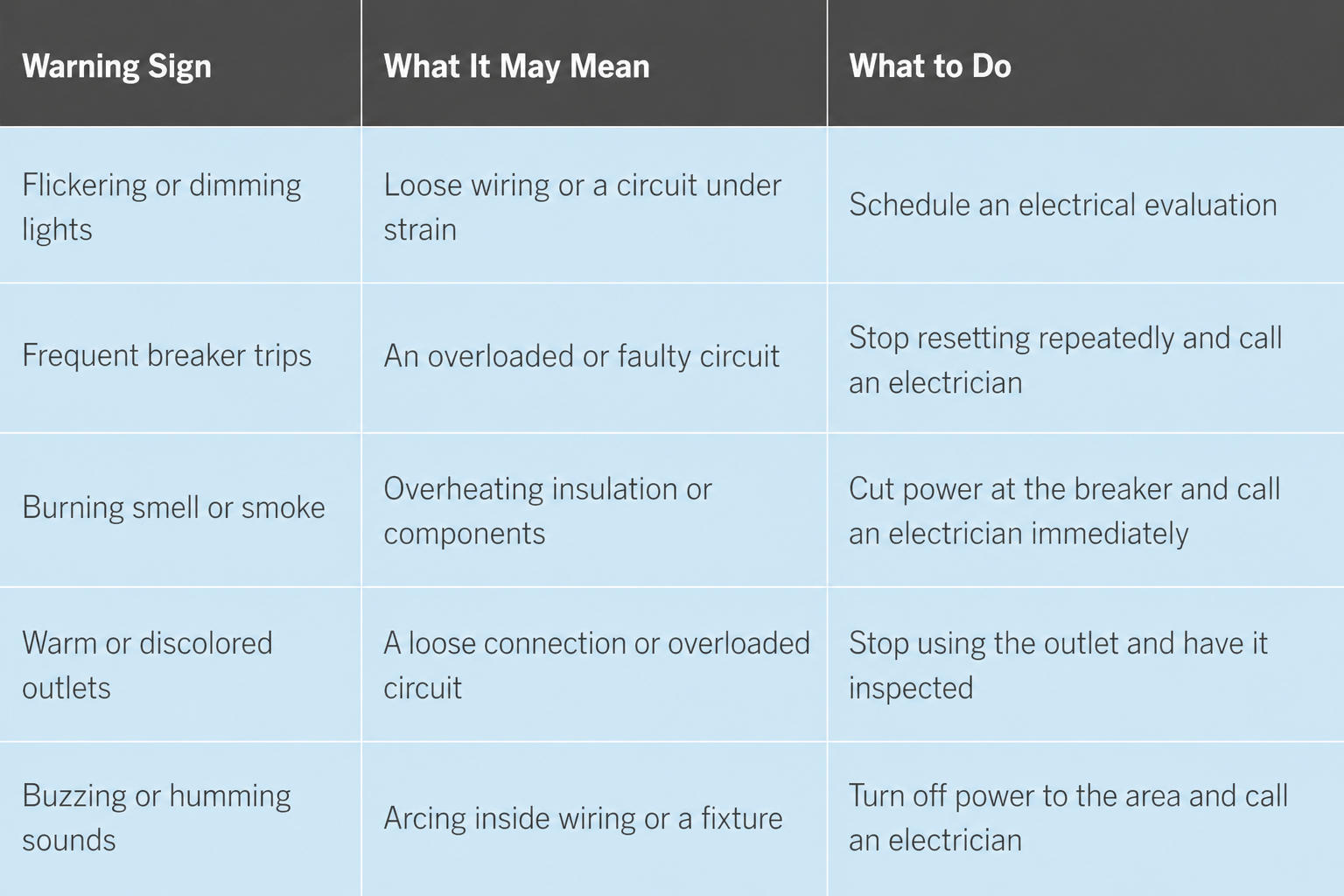
How to Prevent Electrical Fires: A Home Safety Checklist
- Test smoke alarms monthly and replace batteries at least once a year.
- Confirm AFCI and GFCI protection is in place on circuits that require it, particularly in kitchens, bathrooms, and bedrooms.
- Avoid overloading outlets, and never daisy-chain power strips.
- Unplug heat-producing appliances, like irons and space heaters, when they're not in use.
- Keep cords clear of foot traffic, rugs, and furniture.
- Schedule a professional electrical inspection, especially in a home built before the 1990s or one with a history of breaker trips.
Older homes deserve particular attention here. A system built for a mid-century household's electrical load often can't safely absorb everything a modern home runs at once. Homes managing a lot of simultaneous demand can also benefit from smart panel load balancing. If your home regularly trips breakers, still has its original panel, or hasn't had a load evaluation in years, a panel or service upgrade is worth discussing with an electrician before a hazard develops.
What to Do If an Electrical Fire Starts
If you see smoke, sparks, or flame from an outlet, appliance or panel, get everyone out of the house first. Never use water on an electrical fire, since water conducts electricity and can cause a shock. Cut power at the breaker only if you can safely reach it on your way out, and call 911 once you're clear.
Storm damage brings its own hazards. Report downed power lines and outages to Ameren at 800-755-5000 in Illinois, or 800-552-7583 in Missouri, and stay well clear of any line until a crew confirms it's safe. Homes that lose power often during storms can also benefit from a properly installed generator, which keeps essential circuits running safely rather than relying on extension cords strung from a portable unit.
When to Call a Licensed Electrician
Some issues are simple enough to check yourself, like a tripped GFCI outlet or a bulb that exceeds a fixture's rating. Others require calling an emergency electrician the same day: recurring breaker trips, scorched or warm outlets, aluminum or knob-and-tube wiring in an older home, an undersized panel, or any burning smell.
Knowing how to tell if you need an electrician makes that call easier, and treating uncertain situations as urgent is always the safer choice. A professional electrical safety inspection can catch problems before they become emergencies, and where a home has genuinely outgrown its service, a panel or service upgrade is the responsible next step.
Prevention Starts With Awareness
Most electrical fires are preventable with routine awareness, upkeep, and a professional check when something feels off. Brda Electric is an electrical contractor with decades of experience supporting homeowners across St. Louis and Southern Illinois, and that experience means recognizing these hazards before they become emergencies.
Call Brda Electric's 24/7 Emergency Line at (636) 343-0504 for Urgent Hazards
Frequently Asked Questions
What is the most common cause of electrical fires in the home?
Arcing from damaged wiring, loose connections, or overloaded circuits causes most home electrical fires, with electrical distribution and lighting equipment accounting for about half of all fires tied to electrical failure or malfunction.
What are the warning signs of an electrical fire behind a wall?
A persistent burning smell without an obvious source, warm spots on a wall, or discoloration near an outlet can all point to wiring overheating inside a wall cavity. Cut power to the area and call an electrician if you notice any of these signs.
Can an overloaded outlet start a fire?
Yes. Plugging too many devices into one outlet or circuit forces the wiring to carry more current than it's rated for, which generates heat and can ignite nearby material over time.
How often should I have my home's electrical system inspected?
Most homes benefit from a full evaluation every few years, with older homes or those with a history of electrical issues inspected sooner. A new home purchase or major renovation is also a good time to schedule one.
What should I do if I smell something burning but can't find the source?
Cut power at the breaker panel if you can safely reach it, and call a licensed electrician. A burning smell without a visible source often means the problem is inside a wall or the panel itself, which isn't safe to investigate on your own.