
Thunderstorm Safety Tips: How to Protect Your Home

Midwest storm season does not wait for a convenient moment. Lightning, straight-line winds, and flash flooding can threaten a home's electrical system in minutes.
Knowing what to do before, during, and after a storm keeps a family and its electronics safer. This guide walks through each stage, with the local risks that matter most for homes across St. Louis and Southern Illinois.
Key Takeaways
- Prepare a home's electrical system before storm season with surge protection and a backup power plan.
- Stay away from plumbing, corded electronics, and windows during a storm.
- Treat every downed power line as energized and report it immediately.
- Never run a portable generator inside a home or garage.
- Schedule a professional inspection after any storm that causes visible damage or an extended outage.
How Storms Threaten Your Home's Electrical System
A storm can threaten a home's electrical system several different ways at once.
- Lightning-induced power surges. A direct or nearby lightning strike can send a burst of excess voltage through a home's wiring, damaging electronics and appliances connected to the panel.
- Downed power lines. High winds and falling trees frequently take power lines down with them, creating a shock hazard on the ground.
- Flooding near electrical components. Water reaching outlets, the meter base, or the main panel creates a serious risk of shock or fire.
- Extended outages. Storm damage to the grid can leave a home without power for hours or days, which is where backup power planning matters most.
Before the Storm: How to Prepare
Do this ahead of severe weather:
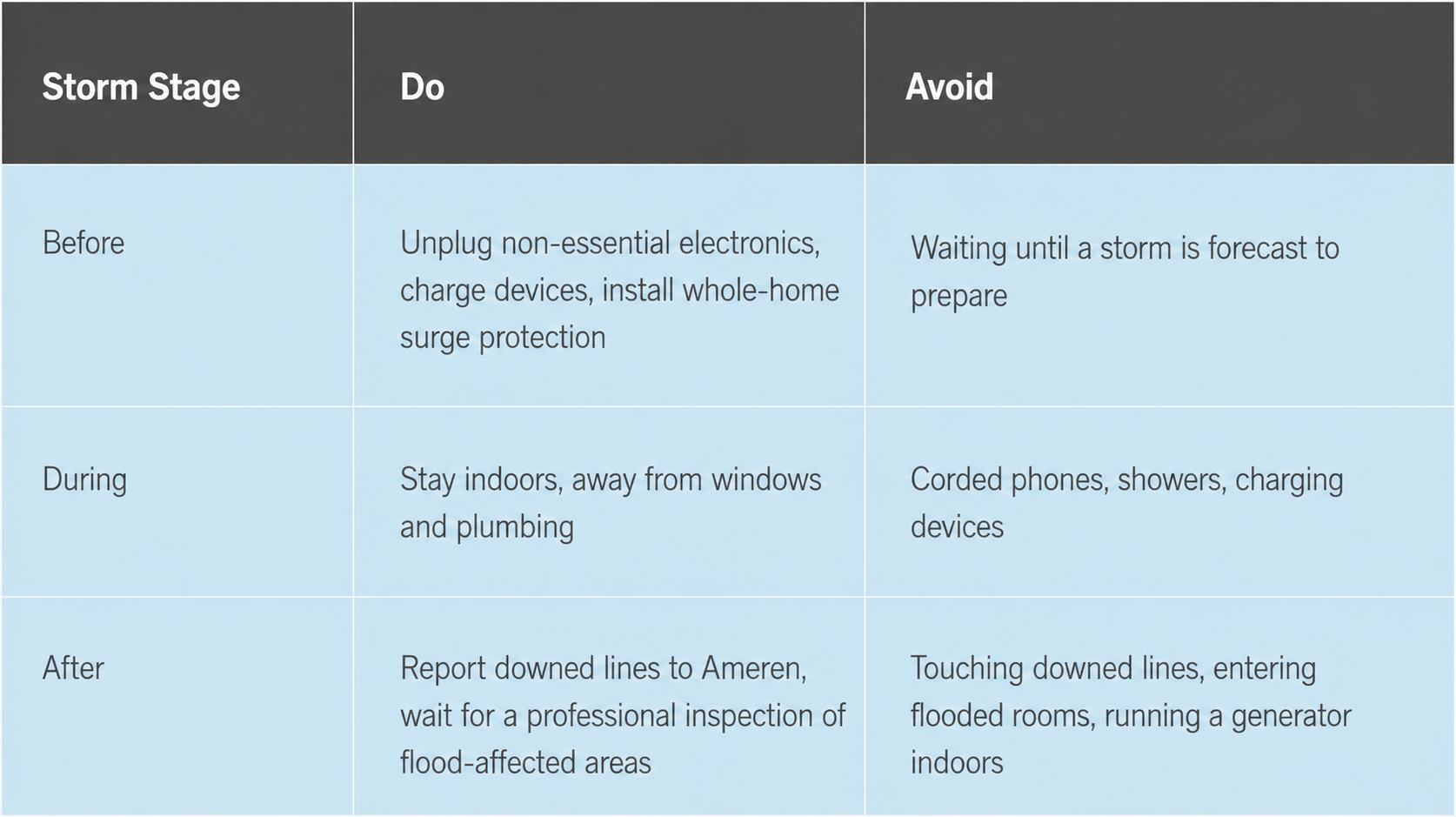
- Unplug non-essential electronics and appliances. Voltage surges that occur when a storm hits, or when power is restored afterward, pose the highest risk to anything plugged into an outlet.
- Charge phones, laptops, and other devices in advance, in case an outage follows.
- Secure or bring in outdoor furniture, grills, and other items that could damage a home's exterior electrical connections in high wind.
- Know where a home's main electrical panel is located, in case power needs to be cut quickly.
Whole-home surge protection installed directly at the panel is a stronger defense than a power strip alone. A panel-mounted surge protector shields every circuit in the home at once, rather than only the outlets a power strip happens to cover. Brda Electric installs whole-home surge protection ahead of storm season as part of its electrical service upgrades. Pairing surge protection with other electrical safety upgrades, such as GFCI and AFCI protection, adds another layer of defense.
For homeowners who lose power often, a standby generator is worth considering. A professionally installed generator connects directly to a home's electrical panel and switches on automatically within seconds of an outage, running on natural gas or propane rather than the gasoline a portable unit needs.
During the Storm: How to Stay Safe
Once a storm is underway, the safest move is to stay inside and away from anything that conducts electricity.
- Stay indoors and away from windows. Wind-driven debris and nearby lightning strikes both pose a risk near glass.
- Avoid contact with plumbing. Water and metal pipes conduct electricity, so lightning can travel through a home's plumbing system. Skip the shower, dishwashing, or handwashing until the storm passes, according to guidance from the National Weather Service.
- Stay off corded phones and wired electronics. Cell phones and cordless phones are safe to use.
- Do not charge devices during the storm. Anything plugged into an outlet carries a small risk until the storm has passed.
A safe rule of thumb is to stay inside for at least 30 minutes after the last clap of thunder before resuming normal activity.
After the Storm: Hazards That Linger
Some of the most serious electrical hazards from a storm surface hours or days after the wind dies down.
- Downed or dangling power lines. Treat every downed line as energized, even if it looks inactive. Keep people and pets away, and report it to Ameren immediately rather than attempting to move it.
- Flooded basements and outlets. If water has reached an outlet, the meter base, or the main panel, stay out of the area and avoid touching anything electrical until a professional confirms it is safe.
- Wet or water-damaged appliances. Appliances exposed to floodwater need inspection before they are plugged back in, since internal damage is not always visible from the outside.
If a portable generator is part of a home's outage plan, keep it outdoors and well away from doors, windows, and vents. Running a generator inside a home, garage, or on a porch can produce lethal levels of carbon monoxide within minutes, even with doors and windows open, according to the Consumer Product Safety Commission.
Warning Signs of Storm Damage to Your Electrical System
A storm can damage a home's wiring or panel without any obvious signs on the surface. Watch for the following, and treat any of them as a reason to call a professional rather than investigate further:
- Flickering or dimming lights that were not an issue before the storm
- A burning smell or visible scorch marks near an outlet or the panel
- Breakers that trip repeatedly or will not reset
- Buzzing, humming or crackling sounds from the panel
- Any part of the electrical system that got wet, even briefly
Many of these same red flags turn up during a routine home inspection.
When to Call a Licensed Electrician
Some post-storm situations call for immediate professional attention rather than a wait-and-see approach.
- Any contact between a downed line and a structure, vehicle, or tree
- A flood-exposed panel or outlet
- Breakers that keep tripping after a storm
- Any visible damage to wiring, the meter base, or the panel
The line between an issue that can wait and a true electrical emergency is not always obvious right after a storm.
A storm is often the moment homeowners decide to invest in longer-term protection. A post-storm electrical inspection can catch hidden damage before it becomes a bigger problem. For homes that lost power for an extended stretch, a standby generator or a panel and service upgrade can prevent the same outage from causing as much disruption next time. For homes managing several high-demand circuits, smart panel load balancing adds another layer of control.
A Safer Home Through Every Storm Season
Storm season is a fact of life across St. Louis and Southern Illinois, but a damaged electrical system does not have to be. A few preparation steps before the weather turns, sound judgment during the storm, and the right follow-up afterward keep a home safer.
Brda Electric has protected homes across the region since 1989, and severe weather season is when that experience matters most.
Call Brda Electric's 24/7 Emergency Line at at 636-343-0504 for Storm-Related Hazards
Frequently Asked Questions
Should I unplug my appliances during a thunderstorm?
Yes, before the storm arrives. Voltage surges from lightning or from power being restored afterward pose the biggest risk to plugged-in electronics, so it is safest to unplug non-essential devices ahead of time rather than during the storm itself.
Does a surge protector protect against a lightning strike?
A surge protector helps guard against the voltage spikes that follow a nearby strike, but it will not stop a direct hit. Whole-home surge protection installed at the panel offers broader coverage than a single power strip, and it works alongside, not instead of, good storm preparation.
What should I do if a power line falls in my yard after a storm?
Stay away from it and keep others away too. Treat every downed line as energized, even if it looks dead, and report it to Ameren right away instead of attempting to move it.
Is it safe to use electronics during an electrical storm?
Cordless and cell phones are safe. Corded phones and anything plugged into an outlet carry some risk until the storm passes.
How do I know if a storm damaged my home's wiring?
Flickering lights, a burning smell, breakers that trip repeatedly, or any part of the system that got wet are all signs worth a professional look. A licensed electrician can check the system before a small issue turns into a bigger one.