

How Much Does It Cost to Install Solar Panels?

Solar power has become one of the most popular home upgrades for homeowners looking to reduce energy bills and gain more control over electricity costs. But one of the first questions people ask is simple: how much to install solar?
The short answer is that most residential solar installations fall within a broad price range. However, the final cost depends on several variables including system size, roof configuration, equipment choices, and local electrical requirements.
When evaluating solar pricing, it helps to think about two numbers: total installation price and price per watt. Both give a clearer picture of what homeowners actually pay for a solar system.
If you're just starting to explore solar energy, our comprehensive household solar power guide walks through how residential solar works, how systems generate electricity, and what homeowners should consider before installing panels.
Below, we break down the real costs of solar panel installation, the factors that influence pricing and how incentives can reduce what homeowners ultimately pay.
How Much Does It Cost to Install Solar Panels?
Across the United States, the average residential solar panel installation cost typically falls between $15,000 and $30,000 before incentives. Once federal incentives are applied, most homeowners see the price drop to roughly $10,500 to $21,000.
These numbers represent typical systems sized for an average household. Smaller homes with lower electricity usage may pay less, while larger homes with higher energy demand may require larger systems that cost more.
Every property is different, so the only way to know the exact cost is to get a customized quote based on your home's energy use, roof layout, and electrical infrastructure.
Understanding Solar Cost Per Watt
Solar installers often evaluate system pricing using a metric called cost per watt. This measurement allows homeowners and installers to compare solar systems of different sizes in a standardized way.
Cost per watt is calculated by dividing the total system price by the system’s power capacity in watts.
So the formula is: Total installation cost ÷ system size (in watts) = cost per watt.
For example, imagine a solar system that costs $24,000 and produces 8,000 watts (8 kW). $24,000 ÷ 8,000 watts = $3.00 per watt.
Today, most residential solar systems fall within a typical $2.50 to $4.00 per watt installed range depending on equipment quality, installation complexity, and regional labor costs.
Using the cost-per-watt metric helps homeowners compare quotes more accurately instead of relying only on total price.
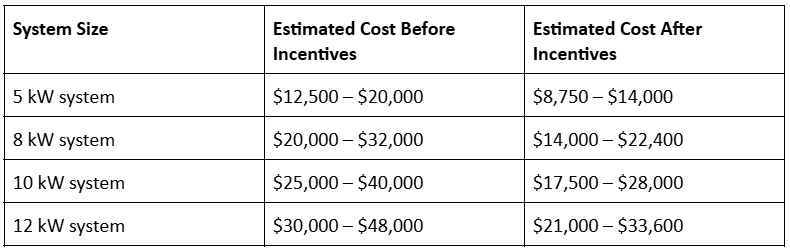
Example Solar Installation Costs by System Size
Because energy usage determines how large a solar system needs to be, installation costs scale with system capacity.
Below is a simplified example of how system size affects the solar panel installation cost.
What Affects the Cost of Installing Solar?
Many homeowners assume solar cost is determined simply by the number of panels installed. In reality, several factors influence the final price.
Your Electricity Usage
Your monthly electricity consumption plays the biggest role in determining solar system size. Higher energy use requires more panels to offset power consumption.
For example:
- Homes using 600 kWh per month may only need a 5 kW system
- Homes using 1,200+ kWh per month may require 10-12 kW systems
Because solar systems are designed to match energy demand, electricity usage often matters more than the square footage of the home itself.
Roof Type, Layout, and Installation Method
The roof itself can significantly affect installation cost.
Factors include:
- Roof material (asphalt shingles, metal, tile)
- Roof pitch or steepness
- Multiple roof angles
- Limited space or shading
- Structural requirements
Simpler roofs with large, unobstructed surfaces are typically easier and less expensive to install solar panels on. More complex roofs with steep angles, dormers, or multiple tiers may require additional mounting equipment and labor.
In some cases, homeowners may choose ground-mounted solar arrays instead of roof installations. Ground mounts offer flexibility but usually increase installation cost because of trenching, foundations, and additional wiring.
Equipment Choices
Solar equipment quality also affects installation cost:
- Solar panels: Higher efficiency panels may cost more but generate more electricity in limited space.
- Inverters: Solar inverters convert electricity generated by panels into usable power for the home. Common types include string inverters, microinverters, and hybrid inverters. Each option offers different performance and monitoring capabilities.
- Monitoring systems: Many modern solar systems include apps or monitoring software that allow homeowners to track energy production and consumption.
- Battery storage: Solar batteries allow homeowners to store excess solar energy for later use, such as during outages or nighttime hours. While battery systems increase the upfront cost, they also increase energy independence.
Electrical and Utility Requirements
Solar installations often involve significant electrical work, which can affect total project cost. Here are some of the electrical and utility factors that may affect a solar project:
Electrical panel upgrades: If the panel is undersized or outdated, an upgrade may be required before installation. This ensures the system can safely handle both incoming grid power and electricity generated by the solar panels.
Utility interconnection requirements: Before a solar system can operate, it must be approved by the local utility provider. This process is called interconnection. Utilities typically require: permit approvals, electrical inspections, equipment specifications, and installation of a solar production meter or net meter.
Meter or transformer changes: In some cases, the utility company may need to upgrade the electrical meter or nearby transformer to support a solar installation. This is more common in areas where electrical infrastructure is older or where the new solar system will export significant power to the grid.
Distance from the solar array to the electrical panel: The location of the panels relative to the home’s electrical panel also affects installation complexity. If panels are installed far from the service panel, electricians may need to run longer conduit and wiring. Trenching, conduit installation, and additional electrical protection can increase the project cost.
If a home’s electrical system cannot safely support a solar installation, upgrades may be required before the system can be connected. In many cases, solar installations coincide with necessary electrical improvements. Older homes sometimes need updated electrical infrastructure before new energy systems can be added.
Because solar installations involve electrical integration with the home’s power system, working with experienced electricians is critical.
What Solar Incentives Lower the Installation Cost?
Government incentives play a major role in making solar more affordable. The most significant incentive is the Federal Residential Clean Energy Credit, which allows homeowners to deduct 30 percent of the total installation cost from federal taxes.
This credit applies to:
- Solar panels
- Inverters
- Installation labor
- Battery storage systems installed with solar
Some utilities or local governments also offer rebates, grants, or other incentives for solar installations. Availability varies by region and may change over time, so it is important to check current programs when planning a system.
Net metering is another incentive that allows homeowners to send excess solar energy back to the electrical grid in exchange for credits on their utility bill. While it is not a rebate, net metering can significantly increase the financial value of a solar system by offsetting electricity costs over time.
For homeowners evaluating the long-term value of solar in the region, understanding whether solar panels are worth it in Missouri can provide helpful insight into how incentives, electricity rates and local conditions affect potential savings.
What Does Solar Cost After Incentives?
Because incentives reduce installation costs, homeowners should consider both sticker price and net installed cost.
Imagine a homeowner installs a 10 kW solar system for $30,000.
- Step 1: Total installation price is $30,000
- Step 2: Federal tax credit (30 percent) is $9,000
- Step 3: Net installed cost is $21,000
While the homeowner still pays the full installation cost initially, the tax credit reduces the effective price when taxes are filed.
Additional incentives or rebates could further reduce costs depending on location.
Hidden or Overlooked Solar Installation Costs
Most solar installations go smoothly, but some homes require additional work before panels can be installed. These potential costs are often discovered during a site inspection.
Roof Repairs: If a roof is nearing the end of its lifespan, it may be wise to replace it before installing solar panels. Removing and reinstalling solar panels later to repair a roof can add unnecessary expense.
Electrical Panel Upgrades: Older homes sometimes have electrical panels that lack the capacity for solar integration. Upgrading the electrical service panel may be required before installing a solar system.
Trenching and Long Wire Runs: If the solar array is far from the electrical panel or utility meter, additional wiring and trenching may be required. This is more common with ground-mounted solar installations.
Battery Storage Add-Ons: Adding a solar battery increases the project cost but also provides backup power and improved energy independence. Battery systems are optional but increasingly popular.
Financing Fees: Some homeowners finance solar installations through loans or leasing programs. While financing spreads out payments over time, it may include additional fees or interest.
Understanding the full financial structure of a solar project is essential before committing to installation.
How Long Does It Take Solar to Pay for Itself?
The time required for solar panels to pay for themselves depends on several factors:
- System cost
- Electricity rates
- Energy consumption
- Available incentives
- Net metering policies
For many homeowners, solar systems reach payback in roughly seven to 12 years. After that point, the electricity generated by the system effectively becomes free, aside from minimal maintenance.
Because utility rates tend to increase over time, the long-term financial benefit of solar can grow each year.
Exploring how much money solar panels can save homeowners can help you understand the impact of solar over the lifetime of a system.
Is Solar Worth the Cost for Missouri Homeowners?
Solar energy can make financial sense in Missouri, but the decision depends on several local factors.
Compared to states with extremely high electricity prices, Missouri’s energy rates are relatively moderate. This means homeowners benefit most when solar systems are properly sized and installed efficiently.
Key considerations include:
- Current electricity usage
- Roof orientation and sun exposure
- Available incentives
- Utility policies
- Long-term plans for the home
For many homeowners, solar becomes more attractive when combined with rising electricity prices and the long lifespan of modern solar panels.
A well-designed solar system can produce electricity for 25 years or longer, making it a long-term investment in energy stability.
How Brda Electric Helps Homeowners Get an Accurate Solar Quote’
Every home is different, which means solar systems should never be designed using generic estimates. At Brda Electric, solar projects begin with a detailed evaluation of the property’s electrical infrastructure, roof layout, and energy usage.
With deep experience serving homeowners throughout St. Louis and the surrounding counties, the team understands local building requirements, permitting processes, and utility standards that can affect solar installations.
This approach helps ensure systems are designed safely and efficiently.
Key steps include:
- Evaluating electrical panel capacity
- Assessing roof structure and sun exposure
- Reviewing energy consumption history
- Identifying potential installation challenges
- Providing transparent project estimates
Because solar installations integrate directly with a home’s electrical system, working with experienced electricians helps prevent surprises during installation.
Homeowners interested in installing solar can explore Brda’s residential solar services to learn more about system design, installation and energy solutions.
Conclusion
So how much does it cost to install solar panels?
For most homes, installation costs typically range from $15,000 to $30,000 before incentives, with federal tax credits lowering the effective cost by thousands of dollars.
However, the final price depends on several important factors:
- System size
- Equipment quality
- Roof design
- Electrical infrastructure
- Installation complexity
- Available incentives
Because every home is unique, the most reliable way to determine solar pricing is through a professional evaluation.
A customized solar quote takes into account your home’s energy needs, roof structure, and electrical capacity to design a system that delivers long-term value.
If you’re ready to explore solar for your home, Brda Electric can help. Contact the team today to schedule a consultation and get a personalized solar estimate based on your home’s energy needs and electrical system.